
A Woman’s Legacy: Institution-Building, Education, and Civil Resistance
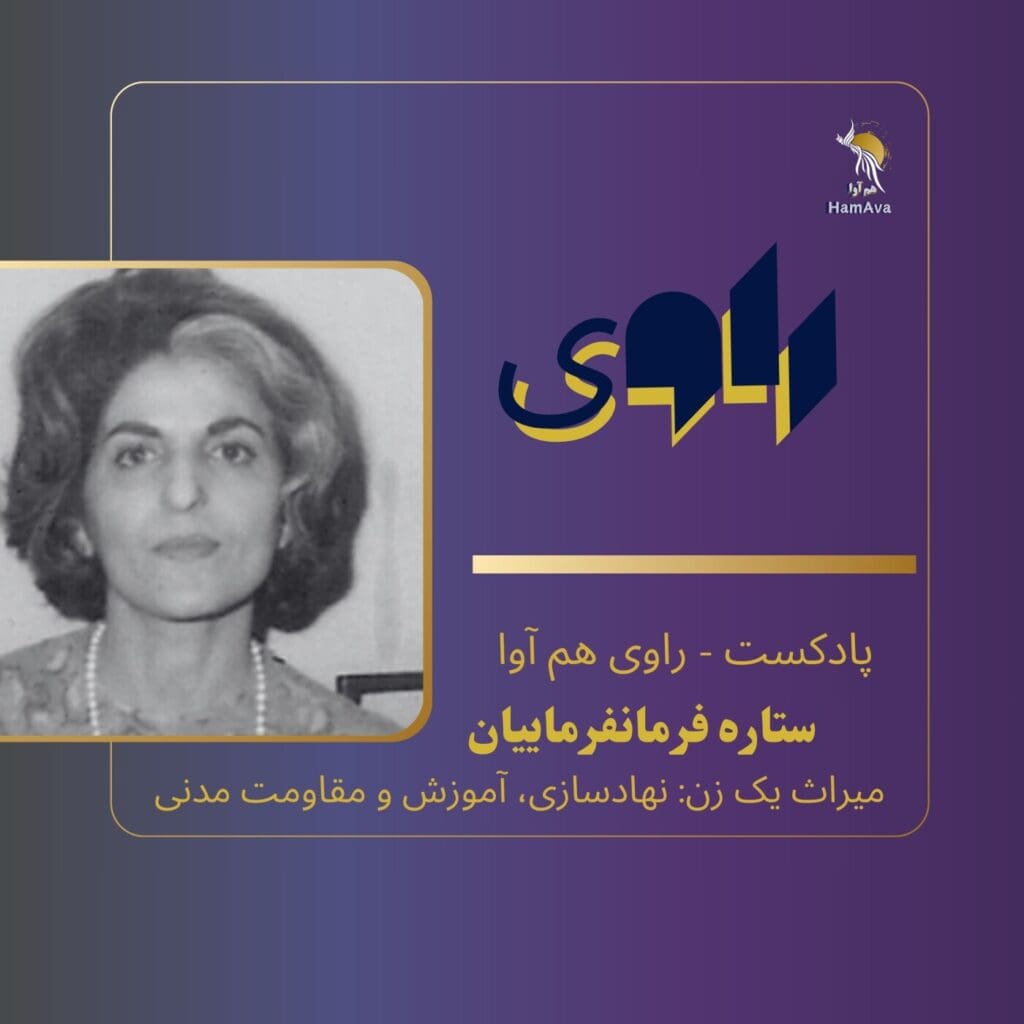
In this episode, we explore the life of a woman whose name may not be very familiar to today’s generation, yet her impact is still present in Iran’s social fabric—even if her name has been removed from textbooks. Setareh Farmanfarmaian, a woman from one of Iran’s most powerful political families, could have stayed within the […]
White SIM Card and Digital Repression
Digital discrimination and the role of the “White SIM” in controlling society, managing protests, and inflicting violence—especially against women activists. A recent exposé by Platform X revealed the reality that people had long known but the government had concealed: Special, unfiltered access for officials and those close to power, While millions face filtering, slow connections, […]
Digital Violence Against Women – Part Two
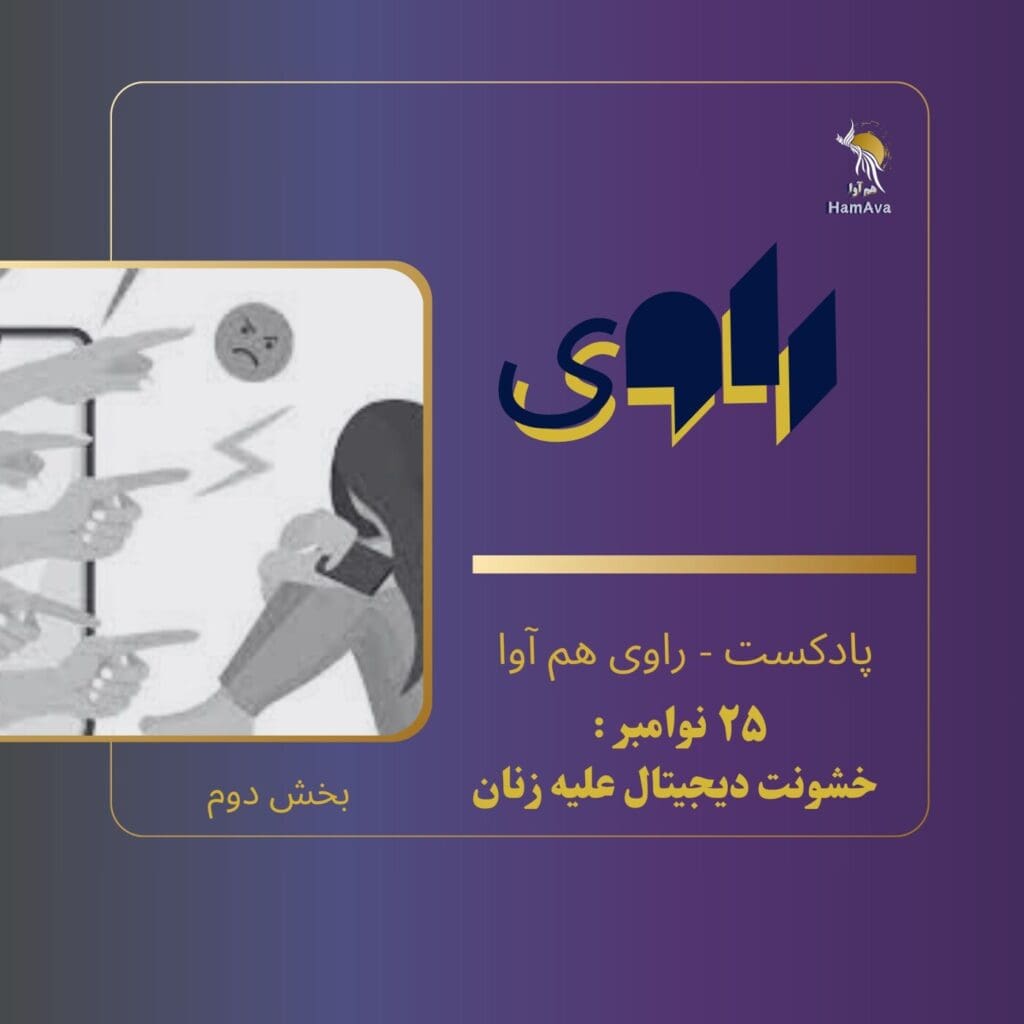
Seventy-three percent (73%) of women journalists are targeted by online violence; Twenty-five percent (25%) have been threatened with murder; Eighteen percent (18%) have received rape threats; And over 20% of these threats have resulted in real-world violence. Ninety-six percent (96%) of all pornographic deepfakes worldwide are made targeting women. In this episode, we examine digital […]
November 25: From the Mirabal Sisters to Digital Violence – Part One
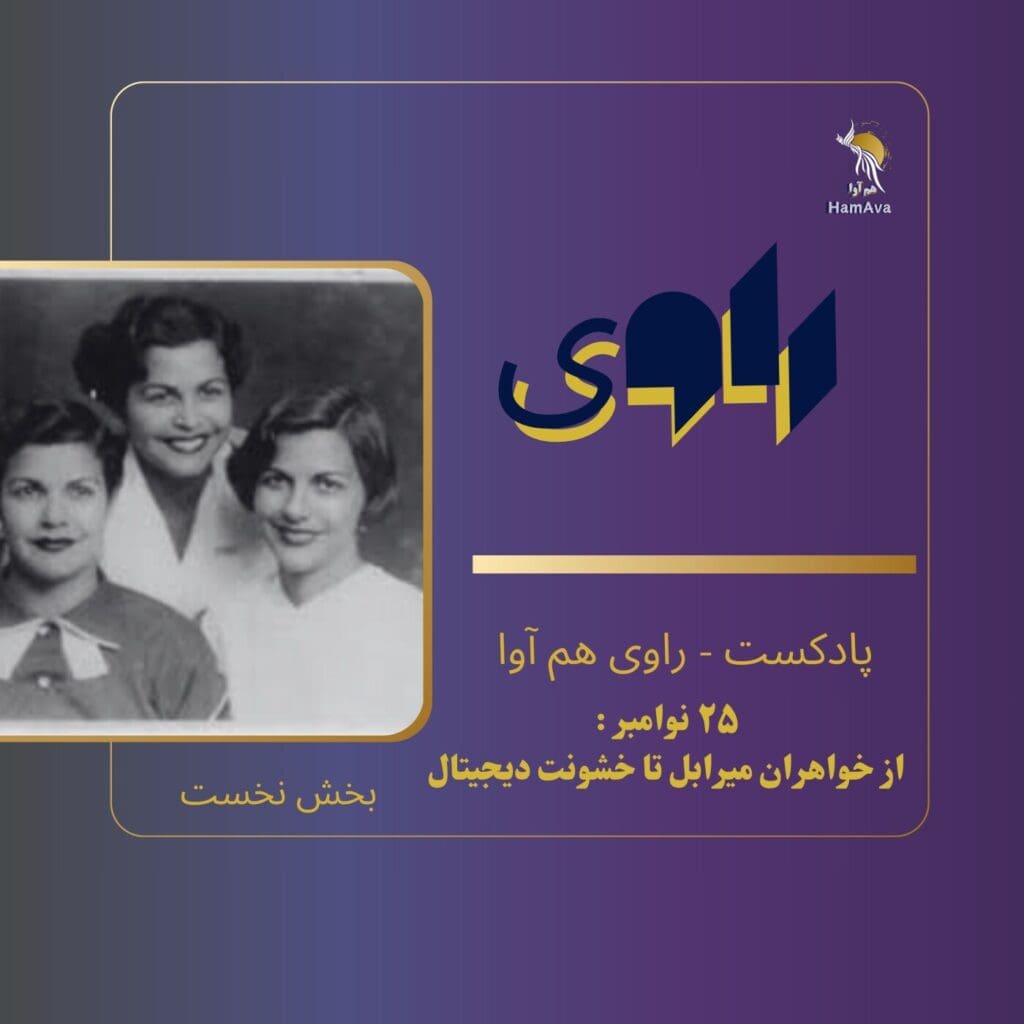
In this episode, we explore the origins of November 25, the story of the three Mirabal sisters, and the emergence of the International Day for the Elimination of Violence Against Women. We then examine structural violence against women in Iran, from laws and politics to education, work, streets, and homes. Our guest, Rana Soleimani, speaks […]
Special Program – November 25: International Day for the Elimination of Violence Against Women – Part Three
In the continuation and final part of the program, in conversation with Ms. Sholeh Pakravan, the mother of Reyhaneh Jabbari, we discuss civic responsibility and the role of women in breaking the cycle of violence. We also examine the issue of child marriage, with a focus on the life of Goli Kohkan, a victim of […]
Special Program – November 25: International Day for the Elimination of Violence Against Women – Part Two
In conversation with Ms. Sholeh Pakravan, the mother of Reyhaneh Jabbari, we examine the structural violence of the Islamic Republic with a closer look at cases of women prisoners sentenced to death. We also look at the life story and death sentence of Sohaila Ghadiri, a woman engaged in sex work who was sentenced to […]
Special Program – November 25: International Day for the Elimination of Violence Against Women – Part One
In conversation with Ms. Sholeh Pakravan, the mother of Reyhaneh Jabbari, we examine the structural violence of the Islamic Republic, with a closer look at the cases of women prisoners sentenced to death. The first part focuses on structural violence in the Islamic Republic and revisits what happened to Reyhaneh Jabbari, drawing on her letters […]
The Structure of Discrimination: Education Under Religious Rule – Part Two
Structural discrimination in the education system under religious rule: In Iran, instead of being a space for growth, freedom, and awareness, education has, for decades, become a tool for social engineering, ideological control, and the reproduction of inequality. In this conversation with Saeed Peyvandi, sociologist and professor at the University of Lorraine, we examine: This […]
The Structure of Discrimination: Education Under Religious Rule – Part One
In Part One of this program, together with Saeed Peyvandi, a sociologist and professor at the University of Lorraine, we go to the heart of this structure to see how the education system in Iran—from textbooks to school management—has become a tool for reproducing power and inequality. In this conversation, we examine: What does this […]
Legal Deadlocks in the Islamic Republic: The Crisis of Law, Stateless Children, and the Absence of Justice
In this episode, Hossein Raisi discusses the legal deadlocks in the Islamic Republic: Whether four decades of efforts by independent lawyers—and even the limited presence of women in some administrative sectors of the judiciary—have brought any real change to discriminatory laws. At the same time, we address one of the most painful legal wounds in […]
The Consequences of Excluding Women from the Judiciary – A Conversation with Hossein Raisi (Part Two)
In Part Two, we examine the consequences of four decades of excluding women from the judiciary: When the judiciary becomes single-gender, justice becomes single-voiced. The absence of women has not only created inequality, but also increased violence against women, normalized discrimination, and fueled systemic corruption. In this episode, we explore: The Ravi–Ham-Avā podcast series aims […]
The Consequences of Excluding Women from the Judiciary – A Conversation with Hossein Raisi (Part One)
“Excluding Women from Justice: The Roots of a Gender Apartheid” After the 1979 Revolution, the Islamic Republic, relying on ideological interpretations of Sharia, completely removed women from judicial positions. While in many Muslim-majority countries—from Tunisia and Morocco to Malaysia, Indonesia, Pakistan, and Lebanon—women serve at the highest levels of the judiciary, Iran became one of […]